

In My Father’s House
In this post, I’ll take you to the deepest, darkest recesses of my psyche—but in full color.
I had this recurring dream of visiting different versions of my father’s house. Each time, I discovered hidden rooms, gathering dust in unknown basements, uninhabited wings, and upper decks that once served as hospices.
If my subconscious were a film, it would be dark—mostly in black and white. At times, with a heavy red undertone. All full of cobwebs.
The dream hangover was often marked with despondency, not seeing those rooms transformed into something that I hoped to be beautiful and livable. I felt sorry for the wasted potential of those rooms.
* * *

… or could this picture of Valentino Garavani’s Château de Wideville have inspired my recent dream? (Photography by Simon P Watson of Archdigest)
This morning, I woke up from a different house. It’s no longer my father’s house, but it still had plenty of rooms. I explored them with wide-eyed curiosity instead of trepid investigation. A joyful older couple resembling colleagues at a past job owned the house and graciously showed me around. We climbed the stairs to the second floor and stopped at one of the children’s rooms before moving to the home library that had glass doors that opened to a balcony.
This time, my dream was in full color—pink and vibrant as the rug in front of my ottoman here in my Chicago apartment.
* * *
Somehow the dream turned into something else. Still the same couple hosting a party in a smaller ground floor room. I knew he was in the house; in some room upstairs. Then he came down and we sat on the same couch with a couple of others. Nobody else saw his vulnerability, but me in our silence.
Sometimes God allows our hearts to be broken so we can be whole again.
Why I Decided Not to Work for a Boss Again ( A Tribute)
When I decided to quit the 9-5 and never return, one reason was my former boss left a very large role to fill.
My early 30s made the toughest years of my life as a working solo parent.
At that time, I was in Manila, balancing the demands of a high-profile career and parenting a young teenager who had undiagnosed ADHD while making a tough relationship work. Coupled with long hours in traffic and little sleep, I went through mental health issues that eventually led to severe burnout.
My parents were already in the U.S. when these things were happening. Meanwhile, my sisters and close friends were also navigating their own lives—grad school, parenting little kids, and their own careers. I felt I didn’t have much support system to help me navigate this unchartered territory of my adult life.
Thankfully, support came at work. Much of this became possible because of my boss, Chito Sobrepeña. Sir Chito—called ‘sir’ in a culture which practiced honorifics as a sign of respect—led an esteemed career in the public sector before moving to corporate social responsibility and family philanthropy. He was a true technocrat who rose from the ranks in the National Economic Development Authority, leaving the government as the Deputy Director General after serving as the Cabinet Secretary in the late Philippine President Cory Aquino’s administration. In the private sector, he led from a position of trust building the late Forbes Asia’s Hero of Philanthropy George S.K. Ty multi-billion social responsibility initiatives.
But this post isn’t about the many achievements that made it hard to replace his shoes as my boss when I decided to segue out of corporate life.
It was about Sir Chito’s brand of leadership.
Compassionate and Empowering Servant Leadership
Sir Chito was the type of boss who didn’t condone office politics—although our work involved a lot of working in politics. He made staff members talk with each other when issues arose instead of talking things through him. He applied the same principles even in our dealings with external stakeholders.

At another community project with Sir Chito and the late environmental activist and chairwoman of ABS-CBN Foundation Gina Lopez
As a boss, he led with his Christian faith—balancing high standards with human compassion. I distinctly remember the time when I managed a community event that didn’t generate the attendance we aimed for. He didn’t show any signs of disappointment and blame. Instead, I saw true servant leadership at work. He rolled up his sleeves and demonstrated a lesson on leadership communication that I remember up to this day: sit at the eye level of your partners. We took the microphone off the stage and made a circle out of our chairs. Our community partners, including myself, were defensive, but he switched the tone of the conversation to collaboration simply by just listening.
Growing my career in the Metrobank Group as the head of the GT Foundation secretariat during its formative years came from a place of support, autonomy, and trust. I felt a lot of backing from Sir Chito and his deputy, Sir Nick Torres, that I felt the liberty to be creative and resourceful with setting the foundations and solving some of the birth to toddler challenges of the George Ty family foundation.
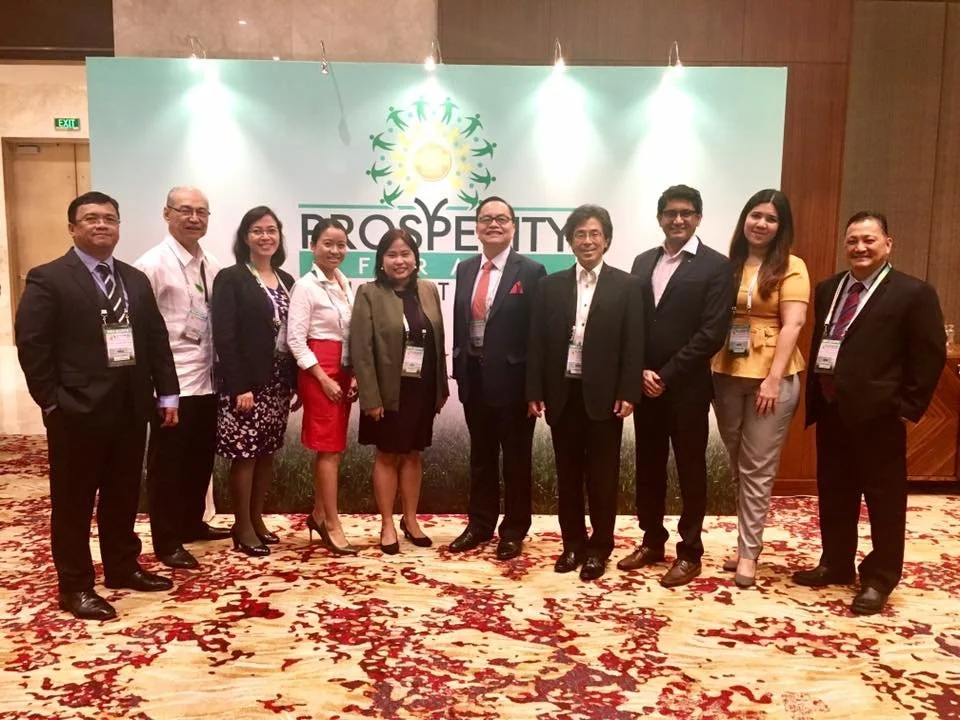
The GT Capital/Metrobank Group contingent at the ASEAN Prosperity Summit in Manila
In executive coaching, I often offer the idea of mentoring and sponsorship to clients who are trying to break into more senior roles. Sir Chito provided both and more. I grew and built a lean team of high-performing leaders, impacting thousands of lives across the Philippines and winning industry awards for our programs because of Sir Chito’s mentorship.
As a sponsor, Sir Chito literally provided a seat at the table for me. For those who are unaware of norms in traditional Chinese Filipino corporate workplaces, one has to earn their way in with maturity and seniority. Sir Chito let me facilitate and present board and executive committee meetings—both in and behind-the-scenes, as well as sat me in on private lunches and conversations that allowed me not only to have a full picture of how the Philippines’ top business, political, and civic leaders think and even banter, but to also be part of it.
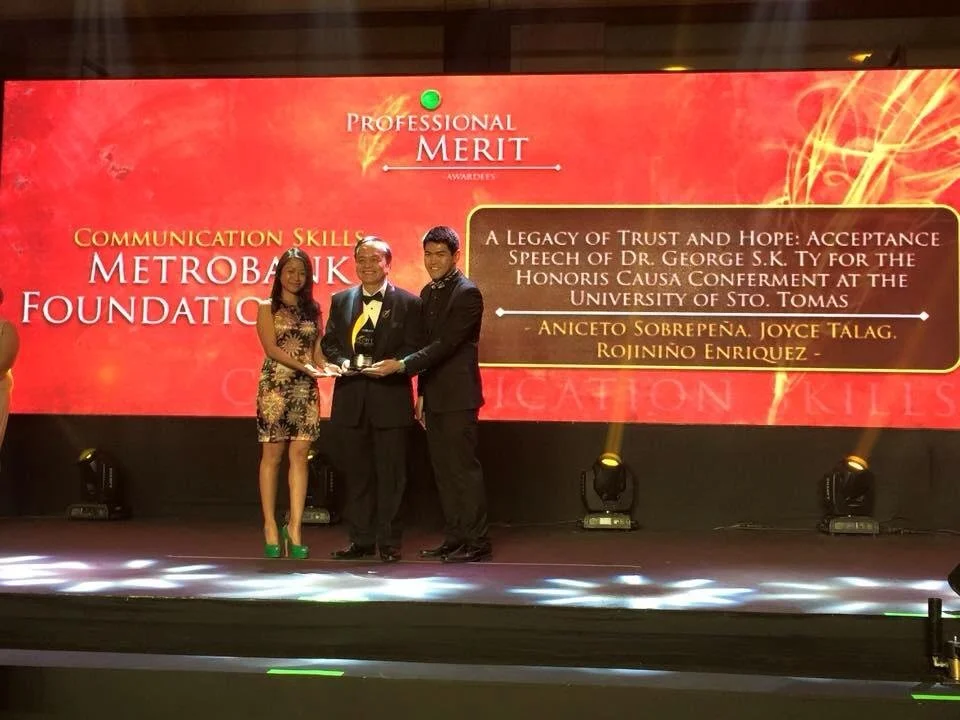
Winning a Philippine Quill for speech writing was a first—and working closely with Sir Chito gave deeper insight on his strengths as a communicator
Sir Chito made us felt seen for our strengths, giving us stretch assignments and opportunities to showcase these even in our fun events. For all our hard work, he provided space for staff to recharge and celebrate that deepened our relationships. Over here in the U.S., workers repeatedly say your colleagues aren’t your family; Sir Chito’s culture-building challenged that.
Most of all, the most heartfelt experience I had of Sir Chito’s compassionate leadership came at the time when I had to negotiate for a working arrangement that would allow me to attend to my parenting and mental health issues. He told me that in all his years of leadership, that was the first time that he encountered an issue like mine. (A lot of context is removed for brevity.) Yet, he offered me the support I needed—flexibility, a means to relocate, and more—to still deliver my best work.
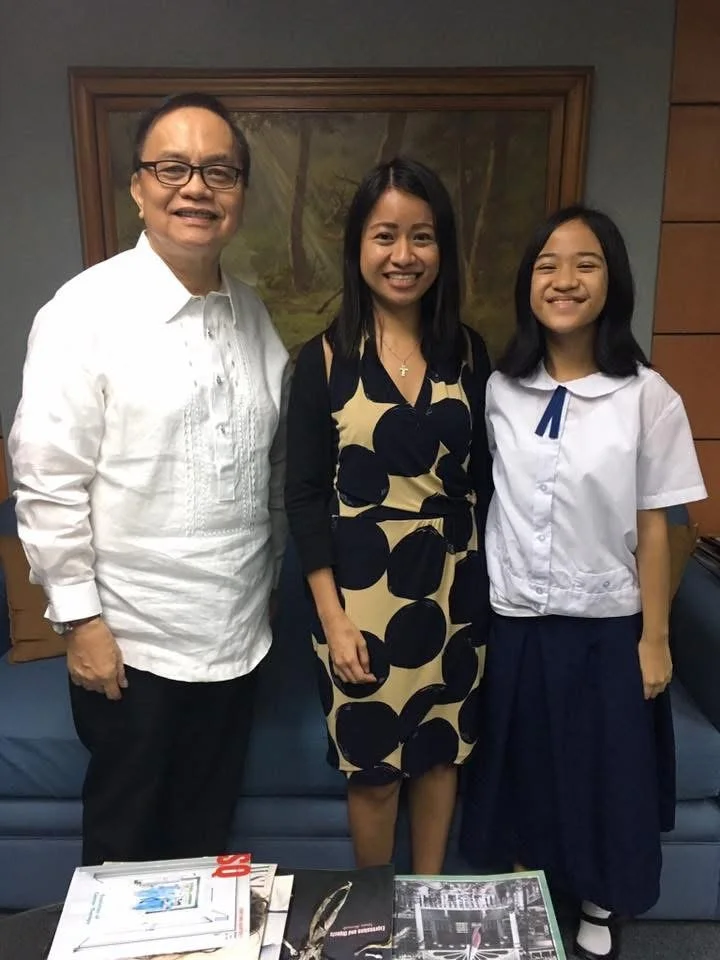
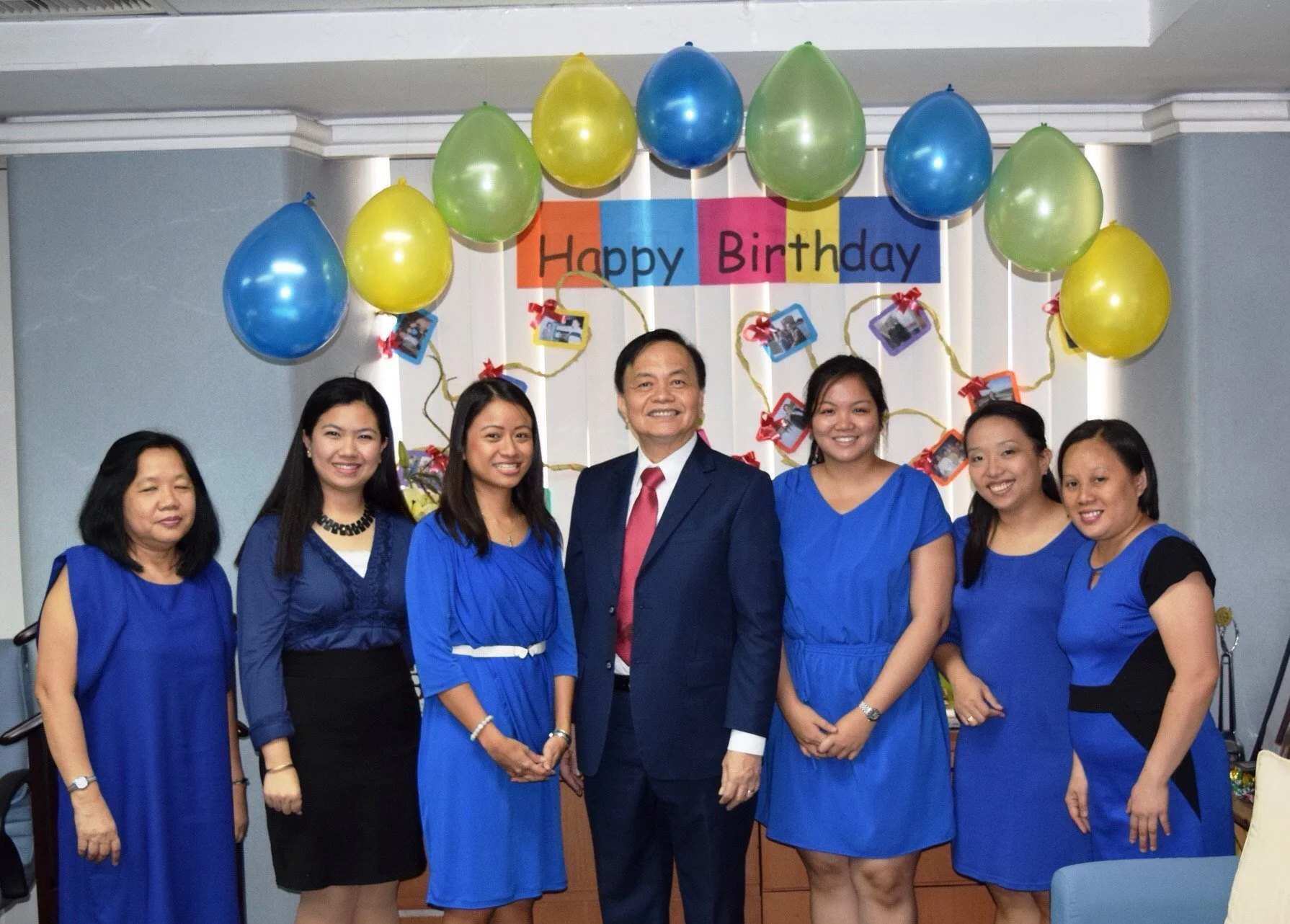
At my farewell party in 2017
He not only allowed me to bring my daughter to work and let her sleep on my shared office’s couch, he made her feel welcome and supported as the father figure that we needed at that time in our lives.
At this point in writing (12:18pm in Central Standard Time), I’m taking a pause to hold and honor this memory of Sir Chito.
Having Sir Chito as boss for six of my 12-year CSR career defined the kind of leadership that brought out the best in me. He led from the depths of his Christian faith and magnified God’s greatness through his unwavering drive for excellence and empowering servant leadership. His achievements notwithstanding, he held a role in my professional life that was never rightfully filled even as of writing.
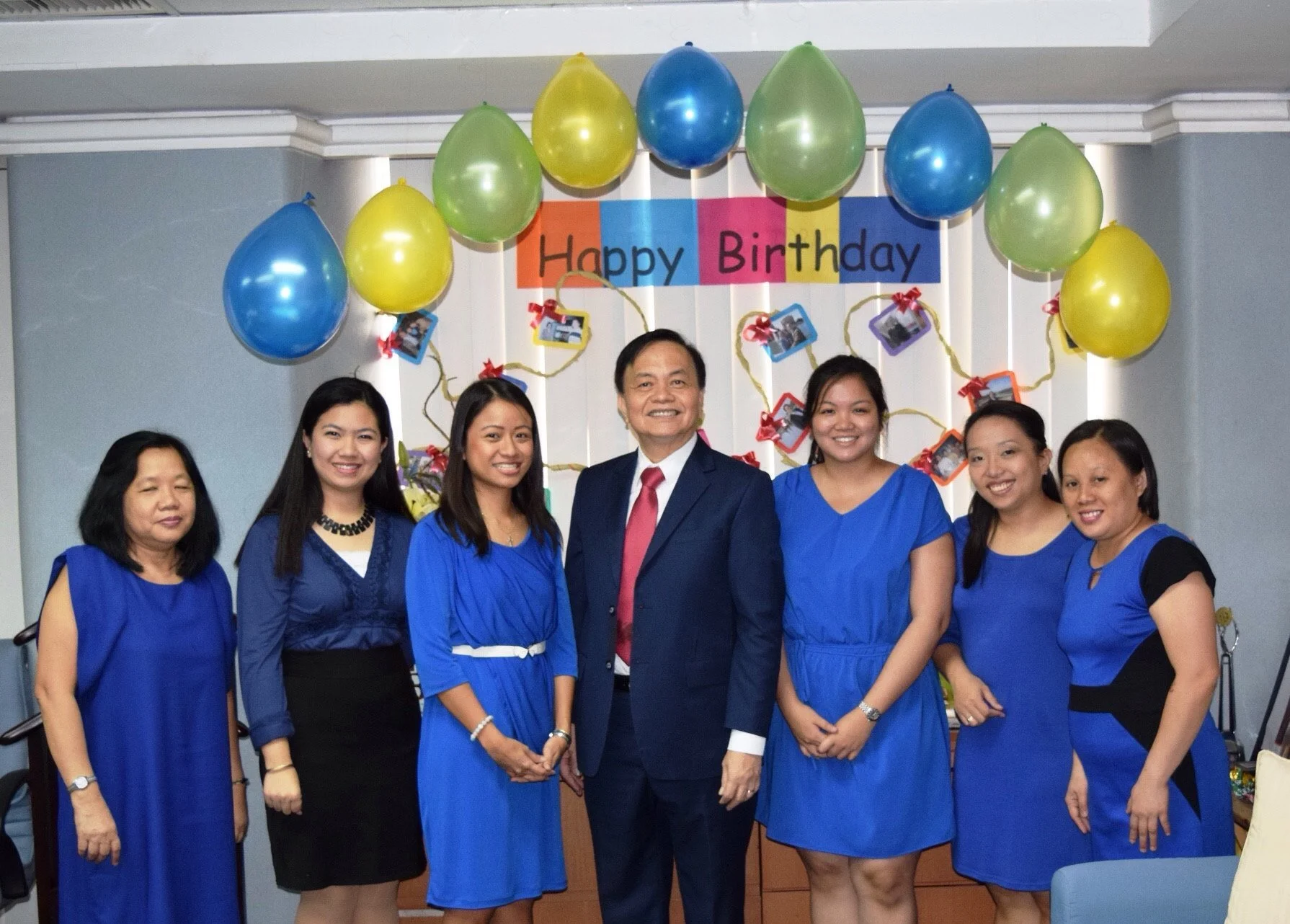
GT Foundation team started as a team of one and grew to a lean and high-impact team by the time I left in 2017
* * *
When I left the foundation, Sir Chito requested a simple project. He asked me to write a primer on managing him, which was inspired by one of my favorite Harvard Business Review classics, Managing Your Boss by Kotter and Gabarro. I completed the project with earnest dedication and just recently, recorded two tribute videos for his 2025 retirement, as requested by his secretary, Janice.
Below is a copy of my main tribute—
Thank you, Sir Chito. You are missed.

Sacred Rituals
New Year traditions reflect our deepest hopes. Yet, every new year necessitates some closures.
Every family’s new year tradition offers a glimpse of their deepest aspirations.
As an adult who’s looking back, I’ve realized that ours has always been about attracting greater prosperity. My mom dressed my sisters and me with polka dots that were as big as the nickel-brass coins in our pockets. We had to hold them tight when we jumped up and down at midnight believing that if we jumped high enough, we’d defy the curse of our DNA. Obviously, we didn’t.
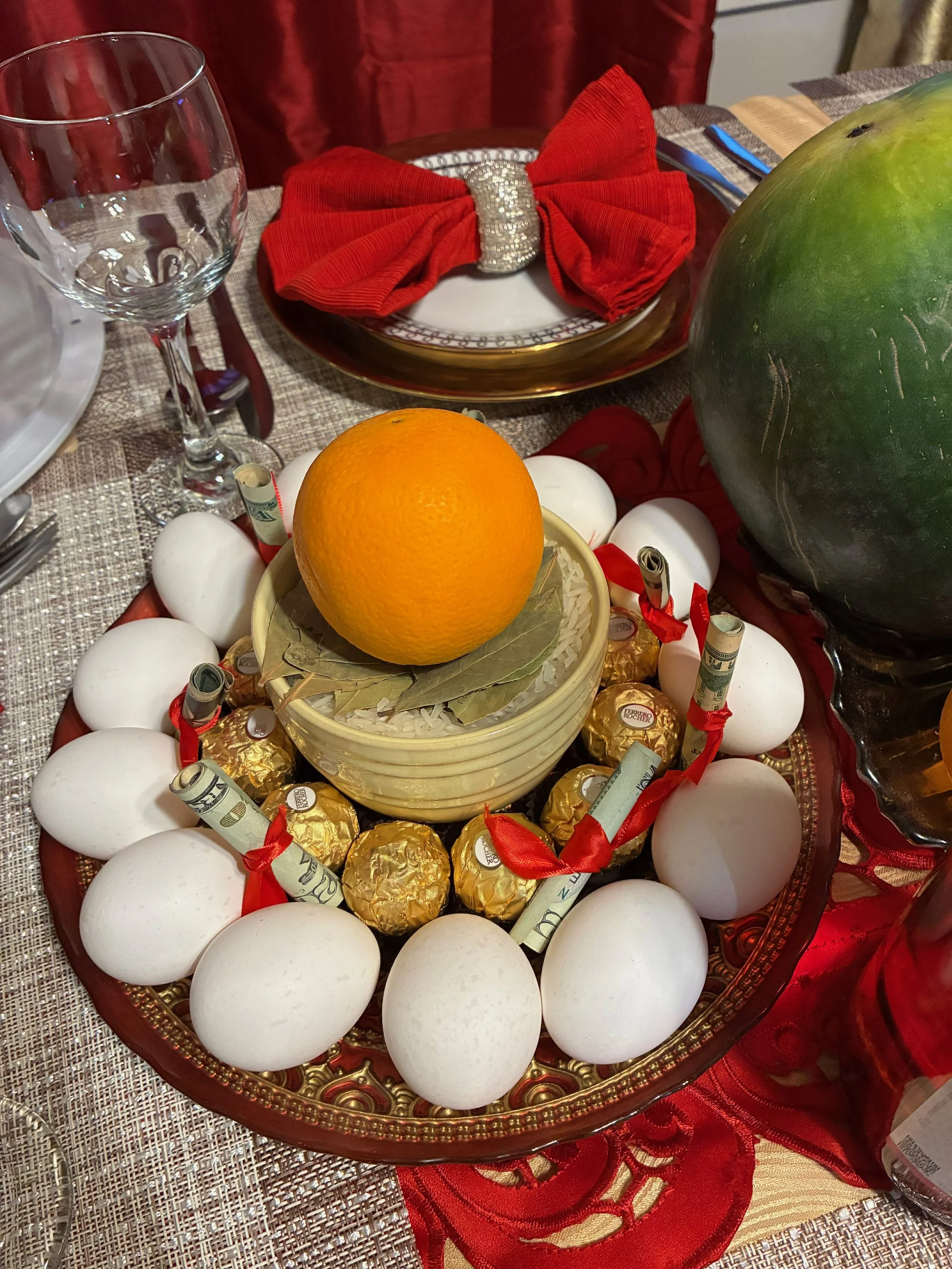
Let me guess—the orange didn’t quite make it onto the fruit plate?
Today, only mom’s 13 round fruits on the media noche table lives through. She has since then elevated this tradition with some western trimmings, adding a plate of 13 Ferrero Rochers, eggs, crisp 100-dollar bills rolled with red ribbons, and a cup of Jasmine rice.
Considering 2025’s egg inflation, the upgrade does prove that our family’s dreams have come true.
* * *
‘Unworking’
I have my own personal tradition—which I prefer to call a ritual. It happens in the days between Christmas and the first working Monday of the new year.
Instead of unplugging completely, I use these days for unworking. Technically, I still get some work done—seeing clients over lighter conversations, cleaning up my inbox, and organizing finances. These small routine tasks help me stay anchored on reality while I tune in to the real purpose of unworking: to heed the yearnings of my body and spirit.
It’s how I find inspiration for my yearly vision boards. As a strategic thinker (validated by various leadership strengths assessments), I move through life guided by the big picture. This vision enables me to define goals that feel deeply motivating for me.
New Beginnings Necessitate Endings
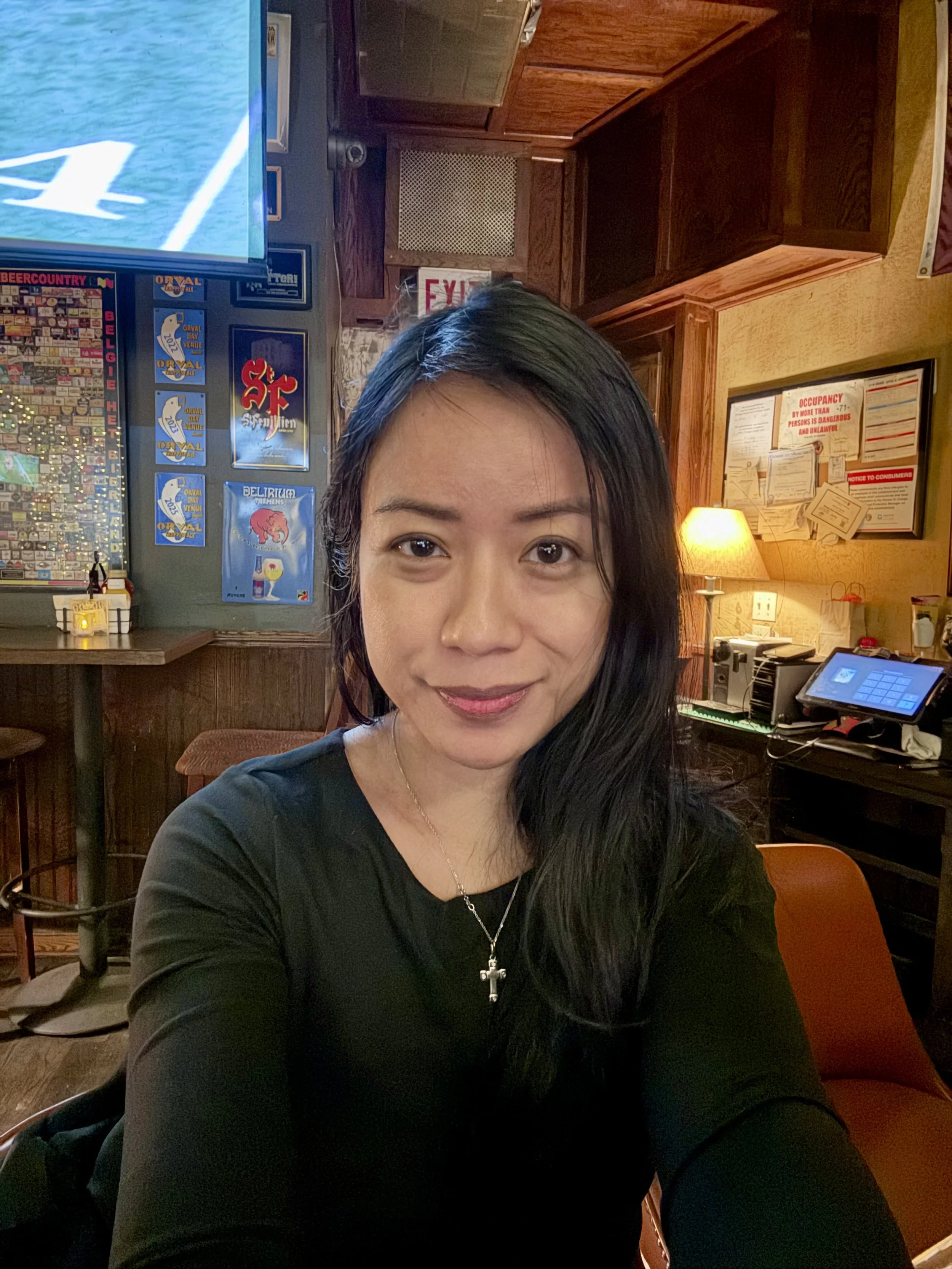
A night cap to another new beginning.
William Bridges’ seminal work on transitions has been a constant companion throughout approaching midlife as an immigrant woman. Still being in transition, I’ve been receptive to solitude as a way of deep listening and discernment.
This liminal space over the holidays invited me to sit through this transformative unworking that also serves my coaching practice. If you’re outside the coaching profession, it helps to know that all great coaching starts with presence. When a coach is able to step out of their ego and come from a place of unknowing, that’s when we’re truly able to coach (instead of mentor, teach, or consult).
However, being prone to seasonal blues, especially when the holiday bustle dies down, I found this year’s ritual extra challenging. I went back to Chicago earlier than planned after explaining my situation to my family. My bags felt heavy because I carried guilt with me.
Grace changed everything. Amid the regret, I found myself attuned to love and forgiveness once again after struggling with the resurgence of some past trauma. (Related post remains unpublished.)
I purged, cleaned, and organized in the days that followed. Some new furniture came that kept me busy until the wee hours of the morning. Invitations came and were unacknowledged, if not declined.
Truth be told, there was something in me that’s been needing to die—
it’s the ember of an old flame.
Leaving my family in California to live on my own had been a lonely transition. In my rush to escape liminality, I lit some fires, hoping they’d mark some direly yearned for new beginnings.
But the winds extinguished most and bent the last one’s blaze.
I had to let it die before it burns me.
* * *
I started 2025 with nothing and accomplished feats beyond my imagination. In the end, I surrendered everything back to my Maker.
"Ready must thou be to burn thyself in thine own flame; how couldst thou become new if thou have not first become ashes!”
– Friedrich Nietzsche in Thus Spoke Zarathustra
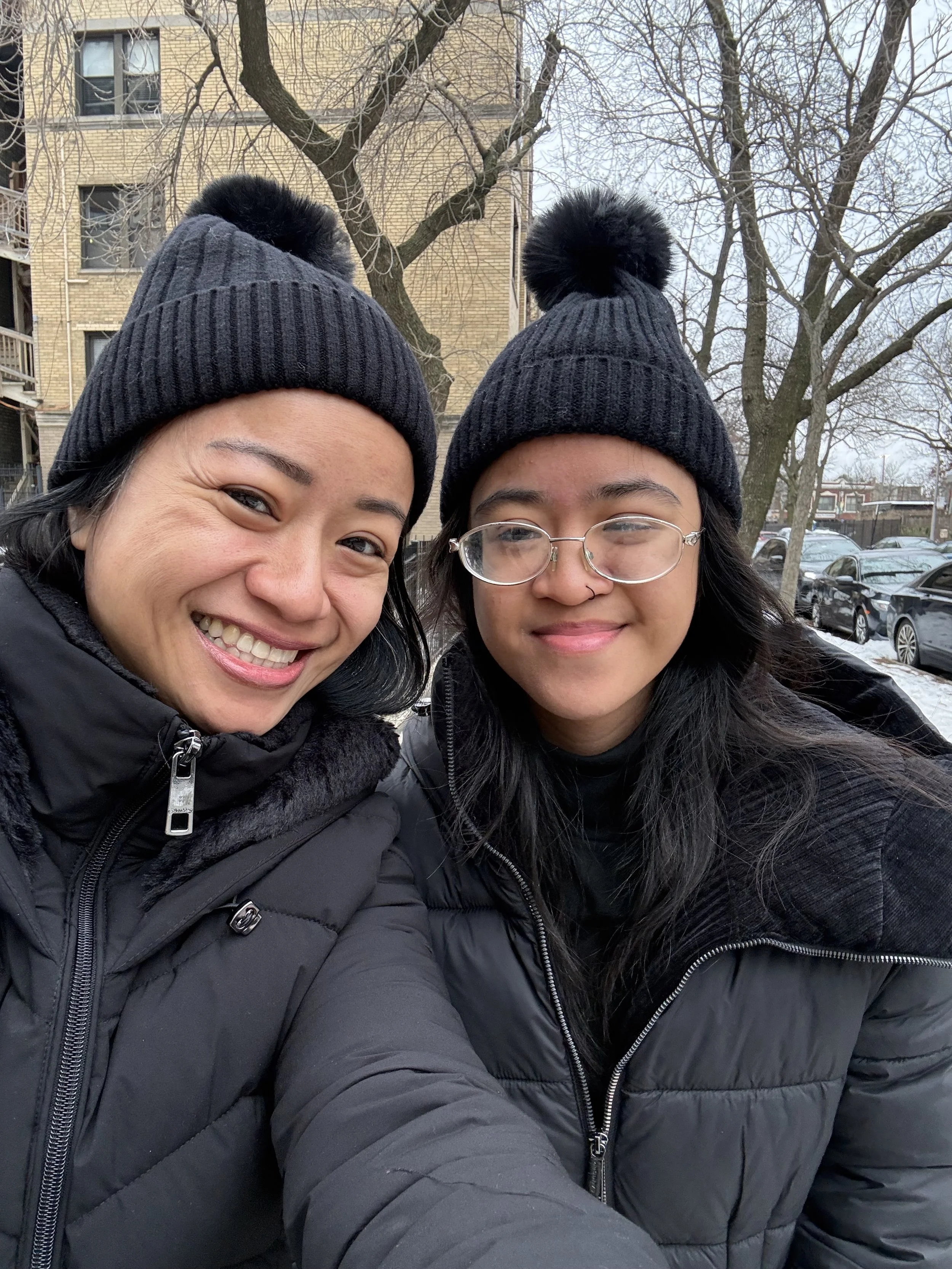
Chicago Like a Local
My daughter’s arrival in Chicago marked the end of my single living in 2025. Here’s how she got a local’s welcome.
After more than two months of solitude, my daughter arrived in Chicago for the first time last Friday. I joked that it was the end of my single living for 2025—which was actually true. Her time here signaled the transition to the holidays, as well as put me in the headspace to close the year accordingly.
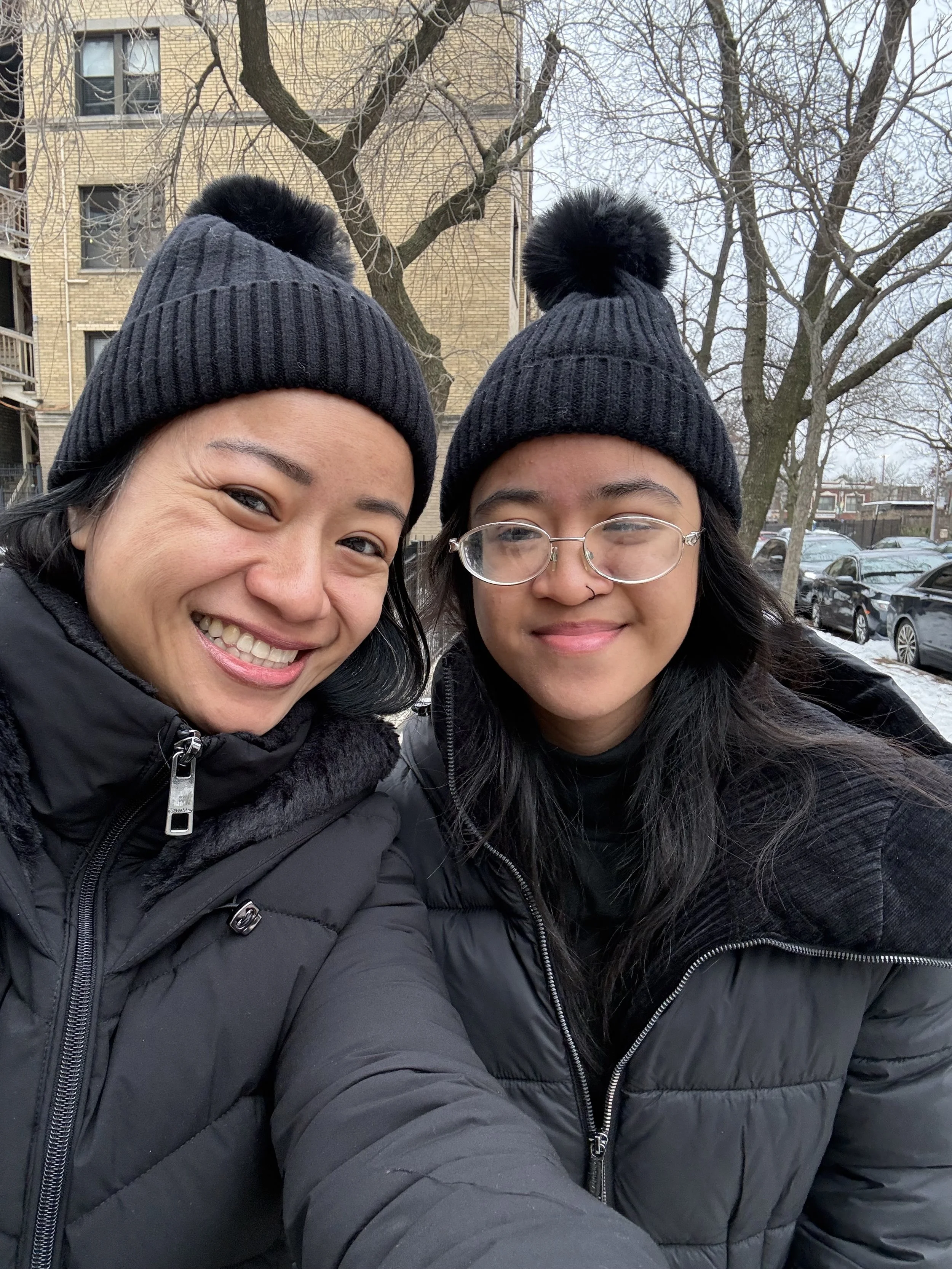
On our way to the icy lake
As a first timer, she only had a rough idea of what she’d like to see in the city. That’s why I thought it would be worth showing her my everyday life.
Chicago’s livability attracted me to it. Besides feeling a sense of safety and community in our neighborhood, the accessibility of public transportation and variety of options for shopping, dining, and more definitely resonated with her.
She got a taste of it as soon as we met at the CTA station in O’hare. Why take an Uber or Lyft? Since the Holiday Train was scheduled to be on the Blue Line that day, I hoped we could ride it. Unfortunately, it left just as she was landing and I was entering O’hare.
***
Some Firsts
Her first meal in Chicago was at the neighborhood pizzeria, but it wasn’t deep dish. She ordered a thin crust pepperoni and cheese more as a preference than anything else.
It was also her first time to encounter snow albeit, it was mostly hardened snow and slush. She was disappointed. She hoped to make snowballs and lie on the snow while fluttering angel wings.
***
My Own First
Showing her my own place came with both pride and an intent to model independence.
It’s the first time I’m living on my own. I had roommates in college then had her next. Coming to the U.S. as immigrants, we also had to live with my parents for a few years. Now that she’s on her own in college, I’m finally building my own life. (I do feel like we’re approaching adulthood in parallel with each other.)
***
On the next day, she experienced a typical weekend in our neighborhood—having croissant sandwiches for breakfast at the corner cafe then walking to Whole Foods to shop for groceries. Thankfully, I already bought her winter coat as Chicago hit sub-zero on her first weekend.
Now that’s a true local’s welcome.
Tempering Great Expectations
America’s dating pool of tech bros and men in finance could be a gamble, but here’s how you can emerge a winner.
In corporate America, men are favored for being confident risk-takers. But in the world of dating, the opposite happens: men tend to be risk-averse—more focused on cutting losses and getting the biggest bang for their buck than growing their romantic investments.
This dating dynamic contrasts my cultural upbringing. Growing up a Filipino in a predominantly Catholic country, courtship ruled our social mores on dating. Men were suitors; women played hard-to-get (pakipot). Kissing on the first date was a taboo, let alone sex. Truth be told, the boys and girls of exclusive Catholic schools would be the first to tell you it’s an expectation, not a rule. Just like Manila’s traffic laws, but I digress.
You can say in a way that the average tech bro or man in finance in America treats dating as safe gambles whereas the men in the country I grew up in approach dating like it’s Sotheby’s. The former weighs the odds of love—sometimes interchanged with lust; the latter bids for love—sometimes confused with lust.
* * * * *
I am neither here to criticize one over the other nor to make the weary jaded. Instead, this post aims to guide every single immigrant woman from a culture that’s similar to mine:
You can’t play the same rules of dating in America.
* * * * *
In one of my women’s groups, a woman recently asked how soon was it acceptable to initiate a talk on exclusivity. The question alone raised my eyebrows. It’s always the man who asks, even if our anxiety unalives us.
The other women’s responses were even more disruptive: Three months is too soon. Date more guys (simultaneously). Up to you if you want to have sex—you don’t have to tell the other guy.
* * * * *
If you’re American, you might ask, ‘What’s that group you’re in?’ Or if Filipino, you might ask, ‘Girl, under which rock have you been hiding?’ Okay, I’m too old for this BS. And yes, I’ve broken the rules in both fields myself.
Nice to meet you, where you been?
The reality is anyone who sells you a dating playbook in America is peddling lies. Just as any game is only as good as the quality of the players, dating is only as good as our matches. Even more so, the quality of the guys we attract is directly proportional to the amount of work we’re willing to put on ourselves—and this goes skin deep.
Expectations wise, it helps to be aware of the cultural nuances between American dating and the place where you’re coming from. Then if you really wish to guard your heart and find dating success, the best thing you can do is to treat dating as an investment in yourself. It’s the only way you can maximize your returns.
“I felt that I owed the deepest gratitude to the best of men.”

Spotting a True Chicagoan
There are severals ways to tell apart a true Chicagoan—one of them is in what they tell you about the winter.

Amid the second snow storm of this season.
There are three ways to tell apart a true Chicagoan:
They know that thin crust is the real Chicago pizza, not deep dish. (Okay, this might invite some violent reactions!)
They call the downtown Macy’s Marshall Fields.
They know what Giardinera is when you ask for it in a restaurant.
But to me, the best way to spot them is in the winter. Chicago ain’t called a windy city for nothing. Those who aren’t from here are quick to discourage transplants like me.
But true Chicagoans are tough. They’re forthright although they practice Midwestern niceties. They don’t downplay the cold; they treat it as a matter of fact. All you got to do is bundle up, they say.
This forthrightness was what emboldened me to pack my bags and leave everything I love in California—year-round great weather included.
* * * * *
Weathering the Cold as a New Immigrant
Being born in the Middle Eastern desert and raised in the Southeast Asian tropics, I barely survived my first US winter. Just to let you know, we’re not even talking about Chicago winters yet. I was in Bakersfield then where summers were bakin’.
Nonetheless, two things helped me get by: my mom’s winter wardrobe and a great central heating system at my parents’ home where my daughter and I stayed first. Winter clothes can be quite expensive; figuring out styles that are apt and fashionable is another thing. For new immigrants, completing a winter ensemble may take some time.
All the above inspired me to start a traveling shop, Joyful Lifestyles, two years ago. It’s currently dormant as I refocus on my main business.
* * * * *
Resilience through Resource
One of the books I read this fall was Ilene Smith’s Moving Beyond Trauma: The Roadmap to Healing from Your Past and LIving with Ease and Vitality. For those of us with dysregulated nervous systems because of past traumatic experiences, becoming aware of the resources that we have at our disposal helps activate our sense of safety.
Ilene categorized resources as external and internal. External resources are persons, places, or things that make us feel safe such as a confidante, beloved pet, hiking trail, or teddy bear. (For Chicagoans, this means investing in long puffer jackets and winter boots!)
As an immigrant, I feel fortunate to have my parents as my primary external resources. I did not have to worry about living conditions because they offered my daughter and me a home when I began with no income and credit history. The professional coaching connections I’ve made intentionally while quarantined in Manila during the pandemic also led me to opportunities to earn decently despite a lack of US-issued degree and experience. Lastly, the small business support from my hometown in Bakersfield, as well as some affinity groups opened many doors for me to which I am forever grateful.
Some immigrants may not have the same resources. This why I am taking the time to also write about internal resources. They are the intrinsic qualities that we naturally have and cultivate. For me, I know that I am smart, resilient, and resourceful. I have survived countless hardships and heartaches as a solo parent and an immigrant woman in midlife. I also know that I have a good heart and a sincere disposition toward the good, which helps me forgive myself for my own transgressions. Most of all, I am deeply spiritual—I believe in God who is much larger than my faith.
If you are figuring out your own resources, I’d be happy to be your resource. Feel free to contact me for appointments and inquiries. In the meantime, here’s a tip: Besides listing down what you have and what’s accessible, also make an effort to add and build to what you already have.
* * * * *
Beauty as a Resource
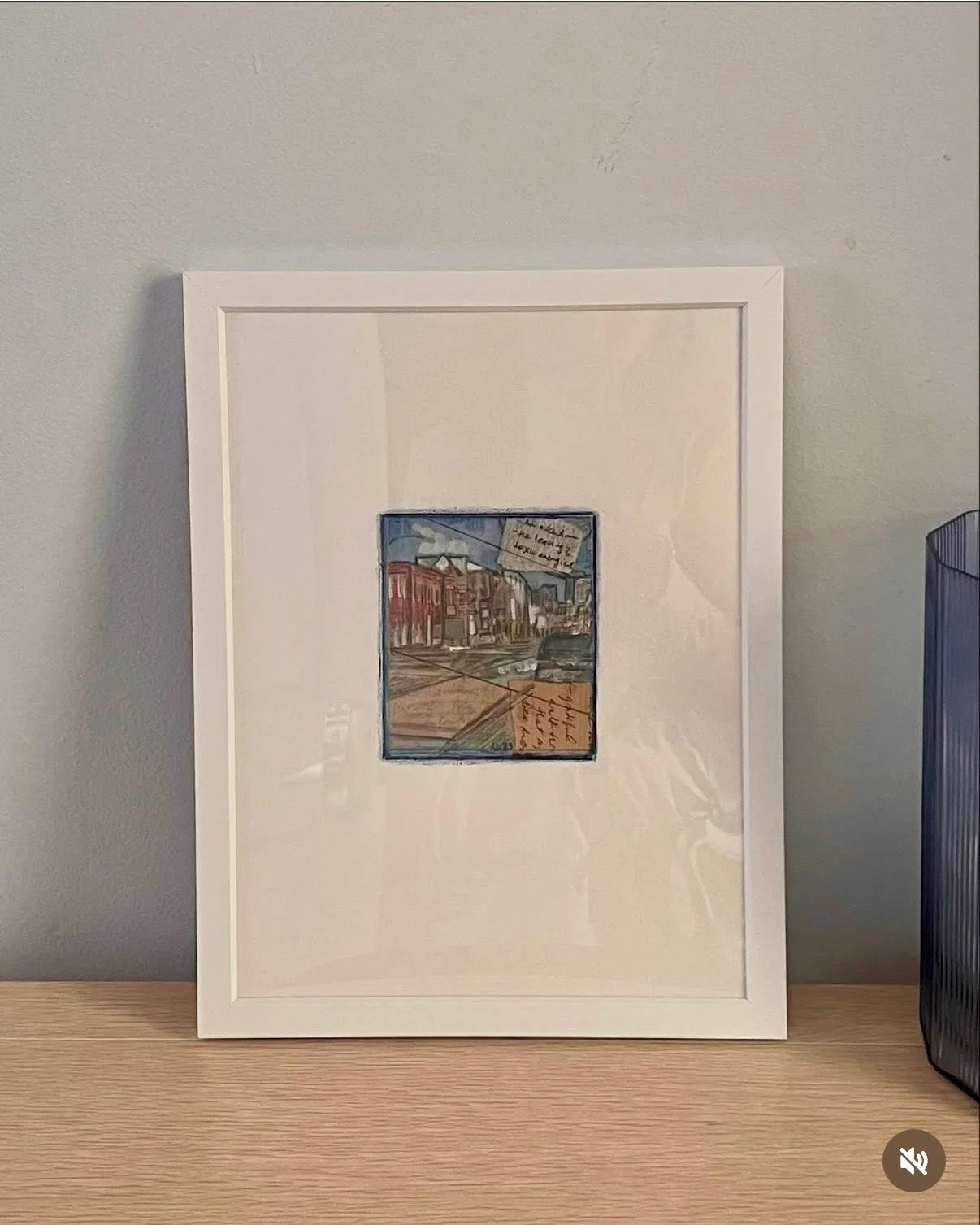
There’s a special piece of art that had prepared me for what’s beginning to look like Chicago’s coldest and snowiest winter in years.

A kind gesture led to this breathtaking view!
Back in the summer I first visited Chicago, I wandered into the Fine Arts Building and came out changed in ways I shall disclose in later posts. N—, the elevator operator who treated his job like a sacred calling, led me to an unobstructed view of the Chicago Fountain and Lake Michigan, not commonly accessible to both guests and locals.
Am I sentient?
I also met Alyson Lyon, a local artist who understood my comparisons between Chicago and California, and musings about car culture and Jungian transformation. It didn’t take her long to show me one of her private art works—Division and Paulina, two intersecting streets in West Town where I later moved to an AirBNB by happenstance. She painted it on a dreary winter day while also writing about evoking hope through the senses as one leaves behind toxic energies.
This painting now sits at my home office. It has become a sort of lucky charm, expanding my threshold for autumn chills and helping me survive two (pre-)winter storms in a matter of six weeks. Most of all, I held on to the hope it promised in one of my grayest weeks here that only God, myself, and you know.
One day, my healing will be complete.

A ‘Grand Entrance’
My peaceful arrival in Chicago was cut short the moment a police car blocked the entry to my street.
After all the peaceful closures I had made in California, I hoped it would be an easy transition to Chicago.
So landing at Midway seemed a wise decision. I did not have to wade through O’hare’s tourist crowds and never-ending hallways with all 41 years of my life in two large suitcases, a handbag, and carry on. Travel light, I kept it to heart.

A typical sight on Lakeshore Drive
Luck was on my side—I got a free Uber Black upgrade with a driver who cheerfully loaded all my bags in his Tesla Model X. I savored the idyllic views of Lake Michicgan as we traversed Lakeshore Drive. Boats sailed while locals ran, biked, and walked with their babies and dogs amid a backdrop of turquoise and aquamarine.
I couldn’t believe this place would be my new home.
Weeks later, a client shared that they found the Chicago crowd the most electrifying!
But my peace was cut short the moment we attempted to enter Montrose: a police car blocked our only entry. Another woman tried to get through, but did not succeed. It’s then that I recalled seeing some Manila connections being in Chicago that weekend. It’s the Chicago Marathon! I couldn’t have chosen a better day to arrive—sarcastically speaking.
Of course, the roads surrounding my apartment were closed. The Uber driver dropped me off at the closest corner. From there, I had push my luggage to get around the neighborhood. They all suddenly felt heavy.
What good fortune I had deteriorated. Because I had to pick up my keys from another building, I needed to get past the crowds—but not without the baggage. The building was more than a mile away. (It’s 2.2 kms for my friends who live in the metric world.)
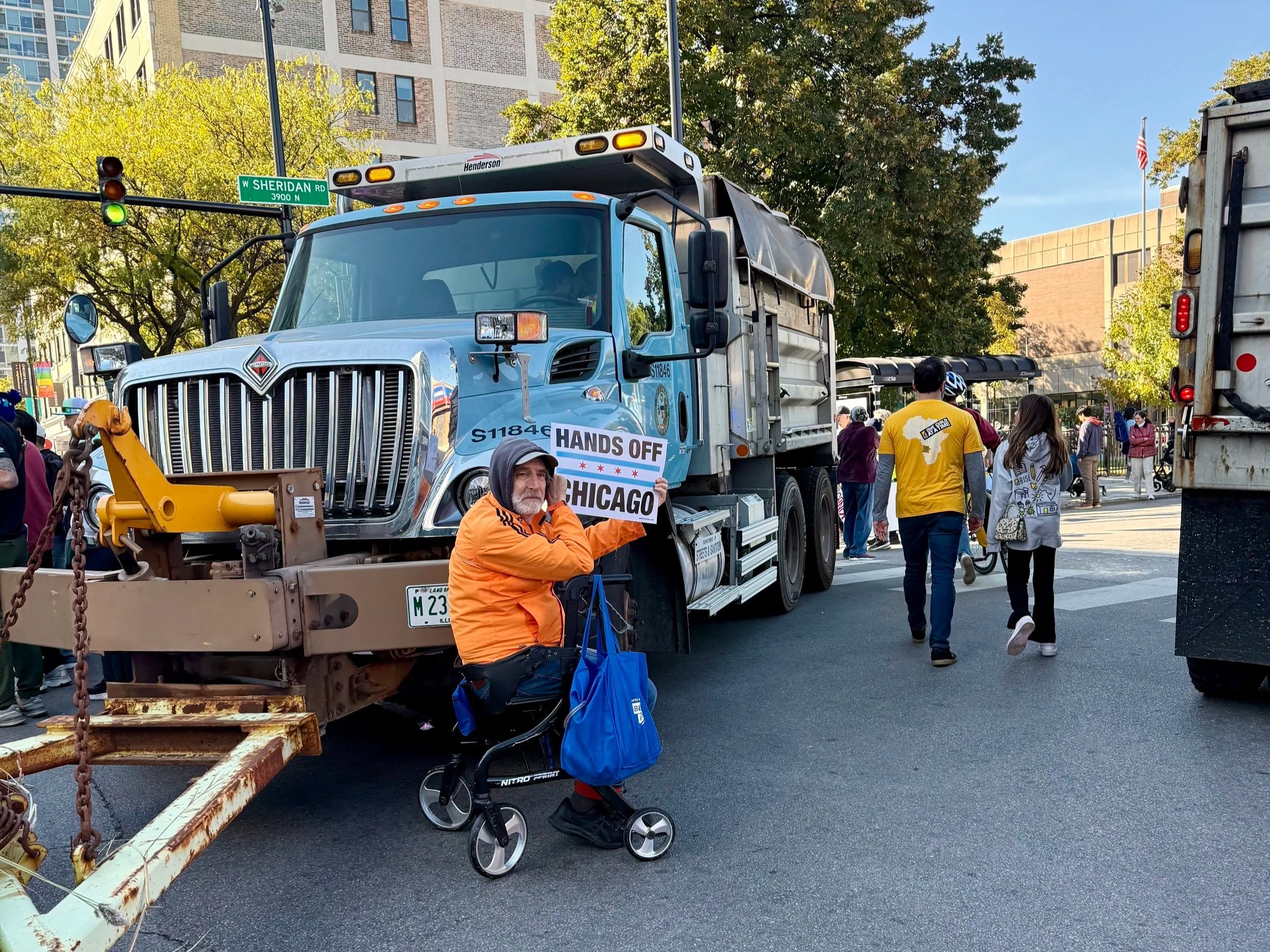
Give it to my neighborhood, the marathon was also political.
I first approached the corner cafe near my apartment; it did not have the space to secure my belongings. Meanwhile, the shop next door did not want to be accountable. I began feeling defeated, wondering if those responses had to do with my being the odd one out. Then I saw a barber shop ran by immigrants. They willingly took my luggage in, assuring me that they will keep an eye on them. I could take my time.
Thanks to these men who spoke broken English, I finally felt safe and ready to take the keys that would unlock a new chapter.
To be continued…